
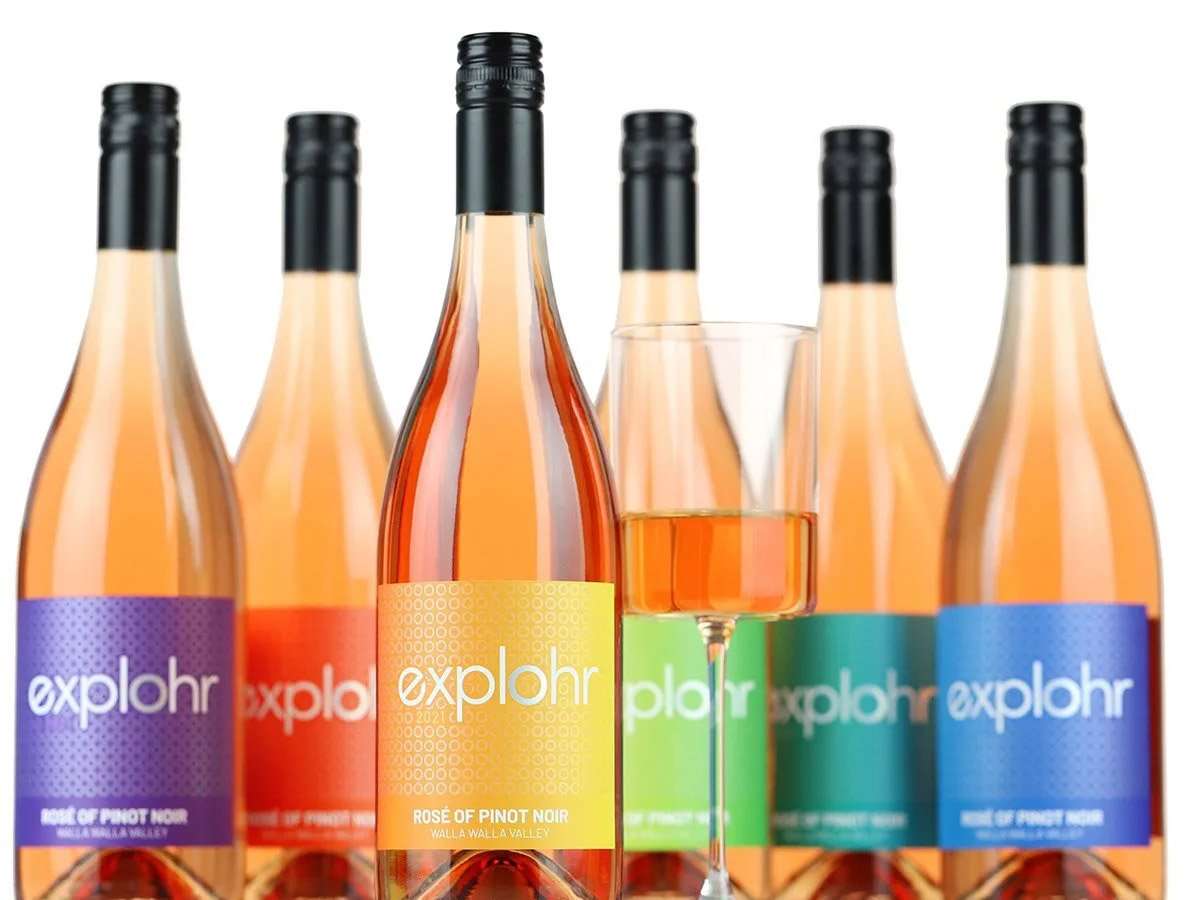
Designing a wine label is only half the job.
Before most wines can be sold across state lines, the label must be certified to comply with federal regulations administered by the Alcohol and Tobacco Tax and Trade Bureau (TTB). That certification process—obtaining a Certificate of Label Approval (COLA)—can be intimidating for new wineries.
Sara Nelson Design is not a compliance consultant or law firm, but we’ve designed wine labels for 30 years. During that time we have worked with wineries from start-ups to nationally recognized brands.
TTB Wine Label Requirements: Questions Answered
We routinely help clients avoid many of the common issues that delay approval. The information below addresses many of the questions we hear most often. Because regulations change, we always recommend confirming current requirements: https://www.ttb.gov/regulated-commodities/beverage-alcohol/wine/labeling.
What information is legally required on a wine label?
Wine labels have limited space, and federal regulations require certain information to appear. While every wine is different, these are the items most wineries need to consider:
* Brand:
The name under which the wine will be sold. It may not be the same as your company name.
* Class or Type:
The designation that identifies what the wine is – “Red Wine”, “Sparkling Wine” or “Chardonnay”, for instance. A grape varietal named on the brand label generally serves as the class or type designation.
* Appellation of Origin:
The geographic area in which the grapes were grown. It is required when certain claims are made, including a varietal designation or vintage date.
The rules become especially important when grapes from more than one area are blended. This is worth verifying before submitting your COLA application.
* Alcohol Content:
The amount of alcohol in the wine, usually stated as a percentage by volume. Specific rules determine when it must appear and when another designation may be used.
* Net Contents:
The amount of wine in the bottle, such as 750 mL. This may appear on the label or permanently marked on the container.
* Name, Address and Bottling Statement:
The name and location of the responsible winery or importer, accompanied by appropriate language (“Bottled by…”, “Produced by…” or “Imported by…” generally). The winery name and address must match the information on the TTB permit and COLA application.
* Sulfite Declaration:
“Contains Sulfites” is required if the wine contains 10 parts per million or more of sulfur dioxide.
* Government Health Warning:
This federally required statement must appear exactly as prescribed by federal regulations.
What is a COLA?
COLA stands for Certificate of Label Approval.
A COLA is generally required for wines containing 7% to 24% alcohol by volume that will enter interstate commerce. Before most wines can be sold, the Alcohol and Tobacco Tax and Trade Bureau (TTB) wants to ensure that the label complies with federal labeling regulations. This process is how they accomplish that.
Receiving a COLA doesn’t mean your trademark has been cleared or that every state requirement has been satisfied. It simply means the label meets federal labeling requirements.
Will Sara Nelson Design prepare my COLA application?
We don’t submit COLA applications on behalf of clients. There are specialists that do that kind of thing and they are worth the expense if you need to be sure that the process goes smoothly.
What we WILL do is prepare everything you’ll need, including correctly sized JPG files and the exact dimensions required for the application. We also review labels with TTB requirements in mind, to help the submission process go as smoothly as possible.
Why do we refer to the back label as the “brand label”?
For COLA purposes, the TTB identifies labels by function rather than by where they appear on the bottle. And that can be confusing!
We commonly designate the back label as the official brand label and submit the front label as the back label. That provides greater flexibility as your product line grows while still allowing us to create a clean, uncluttered front label.
The name on your bond is the one that matters.
“Produced by,” “Produced and Bottled by,” “Cellared and Bottled by,” “Vinted and Bottled by,” and similar statements must correspond to the name of the bonded winery responsible for the wine.
Before submitting your application, compare the name on your label with the name on your bonded winery records. They should match exactly. Even seemingly minor differences—abbreviations, omitted words, punctuation or alternate business names—can result in a COLA rejection.
If you’re uncertain which statement is appropriate or how your bonded winery name should appear, we’ll help identify the issue before you submit your application.
Can I list more than one AVA on my label?
Generally, no.
An American Viticultural Area (AVA) identifies the geographic origin of the wine. A blend may contain wines from several different AVAs, but the label generally may not list multiple AVAs together as the appellation of origin.
The appellation must accurately reflect the origin of the wine. If the component wines come from different AVAs, you may need to use the name of a larger geographic area that encompasses all of those from which the wine’s grapes were sourced.
County, state or multi-county appellation—provided the wine meets the applicable TTB requirements for that appellation—are not uncommon.
For example, if a blend contains wine from two different Washington AVAs, you typically cannot list both AVAs on the label. Instead, the appropriate appellation name might be Washington or another qualifying appellation (such as Columbia Valley) that encompasses the source of all the grapes.
Appellation rules can become surprisingly complex, particularly when blending wines from multiple growing regions. It’s one of the reasons we encourage clients to finalize their sourcing plans before designing labels whenever possible.
Can I create a fanciful name for my wine?
Absolutely!
A fanciful name is a proprietary name created for a wine rather than a description of what’s in the bottle—names like Stratastone, Candy Stripe Rosé or Eschelon.
The fanciful name doesn’t replace the required class or type designation. The label must still identify what the product actually is.
For example, a bottle might prominently feature the fanciful name Eschelon, while the label also includes Red Wine, Cabernet Sauvignon, or another TTB-approved class or type designation, depending on the wine.
One advantage of a fanciful name is that it can become a valuable business asset. It can often be extended across multiple releases and, when properly protected, may become one of your winery’s most valuable intellectual property assets.
We’ll help you determine whether a fanciful name is appropriate for your brand and how to incorporate it into a label that satisfies TTB requirements while building long-term brand value. We can also help you find a fanciful name that is appropriate to YOUR brand.
Can I use my winery’s name in the Produced & Bottled by statement if I use a contract winery?
It may be worth asking.
If your wine is being produced by a custom crush or contract winery, the “Produced by,” “Produced and Bottled by,” or similar statement on your label must correspond to a name authorized under that winery’s federal permit.
Many contract wineries are willing to add a client’s business or trade name as an approved DBA (Doing Business As) on their permit. When appropriate, this can allow your business name to appear in the bottling statement rather than only the contract winery’s legal name. You still must use their city and state.
Not every winery offers this, and it’s not appropriate in every situation, but it’s a conversation worth having before your COLA application is prepared. Like many aspects of wine compliance, it’s a small decision that’s much easier to address early on.
Why do I need to use the word WINE instead of BLEND?
Not every product name tells the TTB what the bottle actually contains.
For example, Rosé is a type of wine, not a grape variety. Likewise, Red Wine and White Wine are class or type designations—not varietals.
If your wine doesn’t qualify to be labeled as a specific varietal (such as Cabernet Sauvignon or Chardonnay), the TTB may require the appropriate class designation to appear on the label. That may mean using terms such as Rosé Wine, Red Wine or White Wine, depending on the product.
We’ll help ensure your label meets TTB requirements while preserving the look and feel of your brand.
What if my wine contains fruit or added flavorings?
Additional ingredients often trigger additional labeling requirements. Fruit wines, flavored wines and other specialty products frequently fall under different labeling rules than traditional grape wines. The required class designation, mandatory statements and even the product name may change.
If your wine contains ingredients beyond traditional grapes, let us know early in the project so we can design with those requirements in mind.
Do your blend percentages add up to 100%?
That sounds obvious, but it’s one of the most common mistakes we see.
When listing varietal percentages, the total must equal 100%. It’s surprisingly easy for rounding, late production changes or simple math errors to create totals that don’t quite add up.
Before submitting your COLA application, take one last look at the math. It’s a simple detail that’s easy to overlook.
What happens if my COLA application is rejected?
Don’t panic.
Most rejections are easily addressed. The TTB typically explains the reason for the rejection and what needs to be corrected.
In many cases, the issue can be resolved with relatively minor revisions before resubmitting the application.
We’re happy to help you work through the (usually) confusing terminology used in the rejection notice.
What if something changes or an error is discovered after my labels have been printed?
Stop and evaluate the situation.
Don’t assume that the labels have to be discarded. Depending on what changed, you may need a revised COLA. But you might be able to continue to use your existing labels with a “use-up permit” from TTB (then fix the problem in the next printing).
The appropriate solution depends on the nature of the change and how the TTB views it. Most situations have practical solutions, and the least expensive one isn’t always the most obvious.
The important thing is not to guess. If something changes after your labels have been approved—or especially after they’ve been printed—contact us before taking the next step.
We’ll help you understand your options and, when appropriate, work with your compliance consultant or TTB specialist to determine the best path forward.
Great wine labels have two jobs.
They satisfy the TTB’s wine label requirements.
And more importantly, they persuade someone to pick up your bottle.
We help wineries accomplish both.
One of the advantages of working with a firm that specializes in wine packaging is that we’ve encountered most of these issues before. We don’t provide legal or regulatory advice, but we design with compliance in mind and often identify potential problems before a label is ever submitted for approval. Catching those issues early can save considerable time, expense and frustration.
Need help turning those requirements into a label that actually sells the wine?
Related Resources